industrialsite selection
Industrial site selection: a 14-point checklist for corporate operations leaders
May 12, 2026
industrialbrownfieldincentivesredevelopment
March 12, 2026 · Max Benedict · 9 min read

Max Benedict
Director of Development at Third Coast Development. Leads industrial build-to-suit and capital structuring.
The word “brownfield” carries the connotation that nobody wants to use the site. Functionally, in Michigan, the word means something more interesting: a site where the regulatory and incentive framework has been built specifically to make the math work. The state passed the Brownfield Redevelopment Financing Act because the alternative was that the most strategically located industrial parcels in places like Grand Rapids, Detroit, and Flint sat vacant for a generation. The math today is, on the right project, surprisingly favorable.
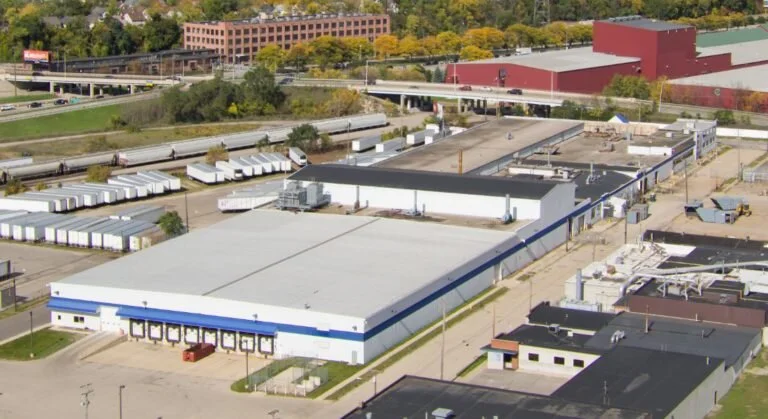
The 320 Hall Street SE redevelopment is a good example of how this works in practice. Third Coast acquired the former Benteler Automotive plant, a 190,000-square-foot industrial building on a contaminated site that had been sitting on the market with no obvious path forward. The brownfield framework, combined with the right capital structure and tenant fit, turned a stalled site into a productive industrial asset. Without the Brownfield toolkit, that redevelopment doesn’t happen. The site is still empty.
This article is about how that math works.
Most people use the word “brownfield” to mean “contaminated site.” The statute defines it more broadly. Under Michigan’s Brownfield Redevelopment Financing Act (Act 381 of 1996, as amended), a brownfield is a “facility” or “eligible property” that meets one of three statutory categories: a site with environmental contamination as defined under Part 201, a “functionally obsolete” property as certified by an assessor, or a “blighted” property as defined under local plan criteria.
The functional obsolescence definition is the one that surprises people. A property is functionally obsolete when its useful life as currently configured has expired (the assessor’s term of art) because of changes in use, technology, or design. An older industrial building with ceiling heights, column spacing, or dock configurations that no longer fit modern industrial use can qualify. A retail property whose floor plate doesn’t work for any current tenant can qualify. Functional obsolescence is what makes the Brownfield TIF tool useful well beyond the universe of contaminated sites.
The blight definition is more politically loaded and varies more by jurisdiction. Local Brownfield Plans must define blight against statutory criteria around tax delinquency, building code violations, fire or police incidents, or unsanitary conditions, but the local Brownfield Redevelopment Authority has discretion in applying them.
The practical screen we run on any site that might qualify: is it contaminated under Part 201? Has the assessor certified or could the assessor certify functional obsolescence? Does it meet the local blight criteria? If yes to any of those, the Brownfield tools are in play.
Tax increment financing is the mechanic, and the mechanic is worth understanding precisely, because most write-ups skip the details that actually determine the developer’s recovery.
The base year value of the property, as assessed before the redevelopment, continues to flow to the existing taxing jurisdictions (the city, the county, the school district) at the existing millage rate. That base value never changes for the duration of the plan. The redevelopment increases the assessed value of the property. The increment (the difference between the new assessed value and the base year value) generates new tax revenue at the same millage rates, and that new tax revenue is “captured” by the local Brownfield Redevelopment Authority for a defined period and used to reimburse the developer for “eligible activities” that the Brownfield Plan identifies.
Eligible activities are the line items. The Act 381 statute defines them, and the categories typically include: Phase I, Phase II, and Baseline Environmental Assessment costs; due care planning under Part 201; lead and asbestos abatement; demolition; environmental remediation; site preparation activities such as grading, dewatering, geotechnical engineering, and utility relocation; and infrastructure improvements such as access drives, water and sewer extensions, and stormwater management.
For projects that go through MEDC’s Act 381 work plan review (which is required for school tax capture and for projects above certain thresholds), broader categories can become reimbursable, including some interest costs and certain administrative expenses.
The Brownfield Plan specifies, for each eligible activity, the estimated cost and the duration of capture. The developer fronts the eligible activity costs as part of the project budget. The reimbursement flows over time as the increment is captured. The capture period for most plans runs anywhere from 5 to 30 years depending on the size of the eligible activity pool, the projected increment, and the millage capture rates available. Larger eligible activity pools generally require longer capture periods to flow the full reimbursement.
The reimbursement is not a grant. It’s a developer-financed recovery of eligible costs through future tax increment. The developer is exposed to the risk that the increment doesn’t materialize as projected (if the building is vacant, the tax increment is lower; if the assessment is appealed down, the increment is lower; if a millage rate gets reduced, the capture is lower). The developer also typically pays interest on the eligible activity carry, depending on how the Brownfield Plan handles interest. A well-structured plan accounts for all of that in the eligible activity request.
Some projects qualify for additional state-level funding through what is now Michigan EGLE (the Department of Environment, Great Lakes, and Energy, formerly MDEQ). The two programs most commonly in play on industrial brownfields:
Brownfield Redevelopment Grants. Competitive grant funding for environmental assessment, due care planning, and remediation. The grants are designed to address the upfront diligence and remediation costs that the developer would otherwise carry against future TIF reimbursement. Available pool varies year to year based on legislative appropriation.
Brownfield Redevelopment Loans. Low-interest revolving loan fund money for the same categories. The loans are useful on projects where the TIF reimbursement schedule is long and the developer wants to lower the cost of carry on eligible activities.
The EGLE programs are most useful early in a project, before the building is generating increment. A common structure pairs an EGLE grant (covering Phase II and initial remediation) with the broader Brownfield TIF capture (covering the larger pool of eligible activities, including site preparation and infrastructure improvements). The two programs are designed to work together, and developers who only pursue one are usually leaving money on the table.
Every Brownfield Plan goes through the local BRA before it goes anywhere else. In Grand Rapids, that’s the City of Grand Rapids Brownfield Redevelopment Authority. In Kentwood, the city has its own. Every Michigan municipality that wants to enable brownfield redevelopment in its jurisdiction has set one up.
The BRA is where the developer presents the proposed Brownfield Plan: the project narrative, the eligible activity budget, the projected increment, the capture period, and the public benefits. The BRA reviews and approves (or modifies) the plan before it goes to the city or township governing body for a public hearing and final adoption, and then, if Act 381 work plan review is in scope, to MEDC.
The single most important thing a developer can do on the BRA side is start early and stay close. Most BRAs have a clear preferred format for plan submissions, a clear list of eligible activities they have historically supported, and a clear sense of what level of public benefit they expect to see relative to the eligible activity request. The plan that gets approved on the first cycle is the plan that has been previewed informally with BRA staff before formal submission. The plan that comes in cold gets sent back for revisions and absorbs three to six months in the process.
The math on a brownfield is not the math on a clean greenfield. The eligible activity pool is the variable that changes everything.
Consider a hypothetical 100,000-square-foot industrial redevelopment on a contaminated infill site. The eligible activity pool, in our experience on projects of comparable scope, might run somewhere in the $1M to $5M range, depending on the contamination profile, the demolition scope, and the site preparation requirements. The reimbursement schedule depends on the projected increment at full lease-up and the capture period, but the developer is recovering meaningful eligible costs over the life of the plan, typically across a capture window of 15 to 30 years.
The capital structure on a brownfield project usually layers four sources: developer equity, construction debt, the eligible activity pool funded against future TIF reimbursement (often through a developer note or BRA-issued obligation), and, where applicable, EGLE grant or loan funding for environmental remediation. The IFT exemption under Public Act 198 frequently runs on top of the Brownfield Plan, addressing property tax burden on the new improvements during the IFT term.
The point is that a brownfield project’s pro forma looks different from a greenfield’s. The capital cost is higher (because of the eligible activities), but a meaningful portion of that capital cost is recovered through the TIF and the EGLE programs over time. The net effective cost basis, once the reimbursements are accounted for, can be competitive with or favorable to a comparable greenfield site, particularly when the brownfield’s location advantages (proximity to infrastructure, labor, or rail) are factored in.
There are sites where the math doesn’t work. Heavy contamination with uncertain remediation cost, weak projected increment, and a soft tenant market for the finished use can all break the model. The diligence on a brownfield is heavier than on a greenfield precisely because the variables are bigger.
The reason brownfield projects pencil at all is that the developers who do them well treat the process as a system: a sequence of regulatory, financing, and political relationships that has to be managed in parallel, not in series. The firms that treat each brownfield as a one-off engineering problem and assemble the team from scratch on every project lose months in the BRA process, lose money in the eligible activity scoping, and lose tenants because the schedule isn’t realistic.
Done well, brownfield redevelopment is one of the most rewarding pieces of work in commercial real estate. The buildings and sites are the ones that matter to the neighborhood. The capital structure is layered enough that the developer’s expertise is the difference between a project that gets built and one that doesn’t. And the result, when the project is finished, is a piece of urban industrial infrastructure that wouldn’t exist any other way.
If you’re scoping a brownfield project in West Michigan and want to talk through what the eligible activity pool, the capture period, and the EGLE program stack might actually look like, get in touch. And for a fuller view of how we approach this work, see our redevelopment capability page.
Written by
Max Benedict
Director of Development at Third Coast Development. Leads industrial build-to-suit and capital structuring.
industrialsite selection
May 12, 2026
industrialwest michigan
May 10, 2026
incentivesMEDC
May 8, 2026